SediMeter™ SM4, SM4P
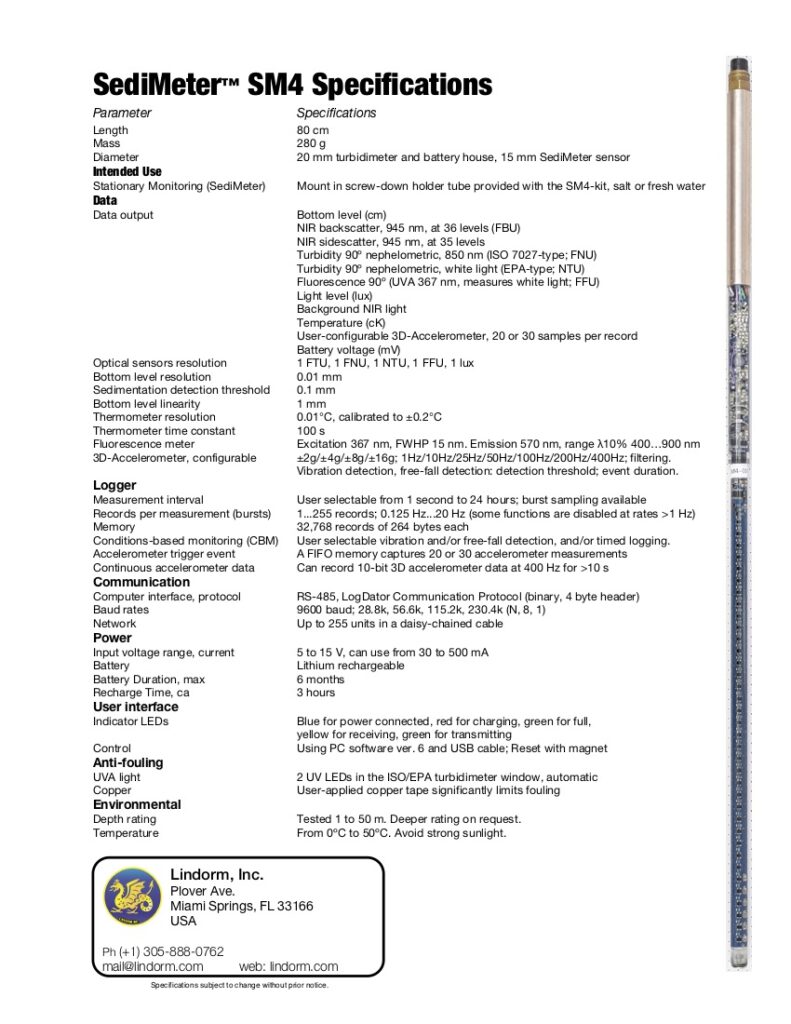
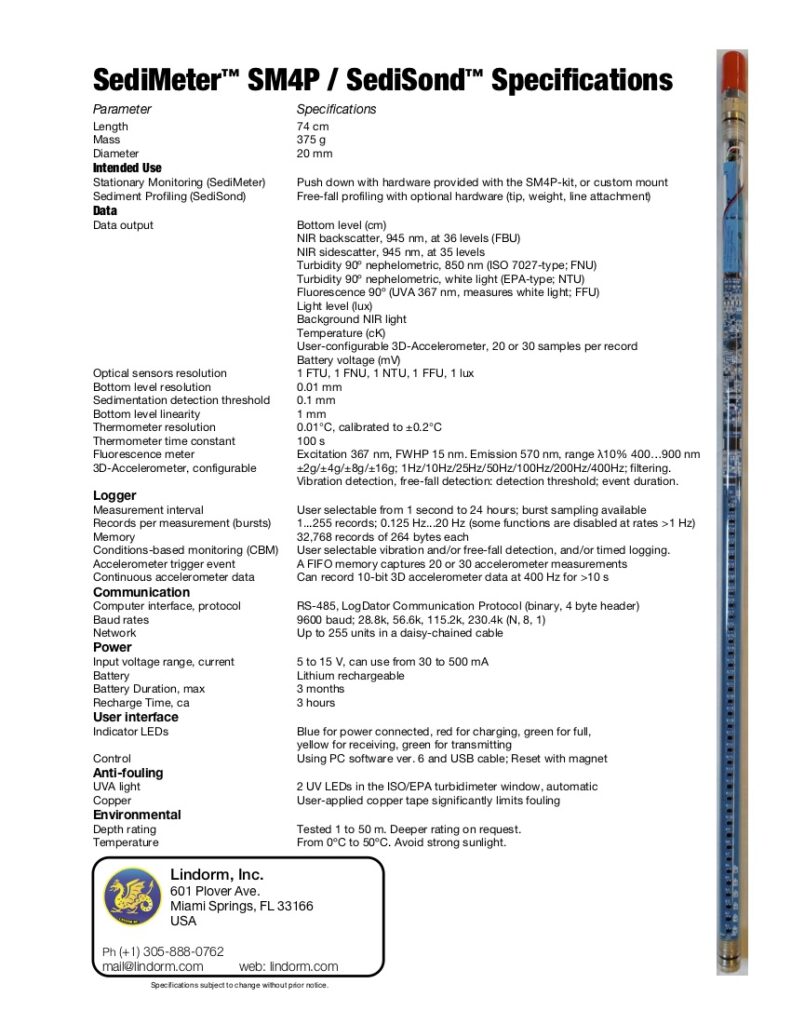
The SM4 is the fourth generation SediMeter. It shares the exact same electronics and sensors as SM4P, but differs in its hardware design and intended usage scenarios.
Apart from the core SediMeter™ sensor—which contains 36 near-infrared optical backscatter detectors (NIR OBS) spaced 1 cm apart—the instrument also features:
- ISO and EPA-style turbidity sensors
- A visible light sensor
- A fluorescence sensor for 90° and 180° reflection
- A thermometer
- A 3D accelerometer capable of measuring at up to 400 Hz
The instrument can be programmed to wake up and begin recording automatically when the accelerometer detects a shock or vibration, enabling condition-based monitoring (CBM).
SM4
This model uses the original deployment method of screwing a holder tube down into the sediment, into which the instrument is then placed. Key advantages include greater battery capacity, a secure and independent installation, and the ability to service or exchange the instrument while maintaining the exact same measurement location.
SM4P
In this model, the electronics and battery are encapsulated in a thick-walled polycarbonate tube, making it exceptionally rugged. When used as a stationary monitoring instrument, it is either driven into the sediment or attached to an existing support structure.
SediSond™ mode
The SM4P can also be deployed in SediSond™ mode as a free-fall penetrometer. In this application, the device is dropped to free-fall through the last few meters of the water column into the lake bed or seafloor sediment. By recording the deceleration profile using the accelerometer at 400 Hz, the instrument records a precise profile of sediment mechanical resistance.
The SM4P Provides a Unique Solution
By measuring both deceleration and optical backscatter simultaneously through the sediment-water interface, the SM4P in SediSond™ mode creates a comprehensive dataset for interpreting superficial sediments. This dual-data approach is exceptionally valuable for identifying ephemeral, low-density layers like fluid mud—which may appear optically dark but possess a physical density nearly identical to water. When analyzing a turbidity profile across the sediment-water interface, cross-referencing it with SediSond™ mechanical data proves invaluable for unlocking the true nature of the layers.
Alternative methods fall short: traditional sediment coring often pushes fluid mud aside, causing it to be missing from the core sample entirely. Visual inspection via divers or cameras is also frequently impossible due to near-zero visibility. The SediSond™ successfully solves a critical data gap where no other viable solution exists.
Flyer and Spec Sheets
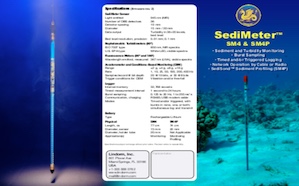
Click image for PDF